






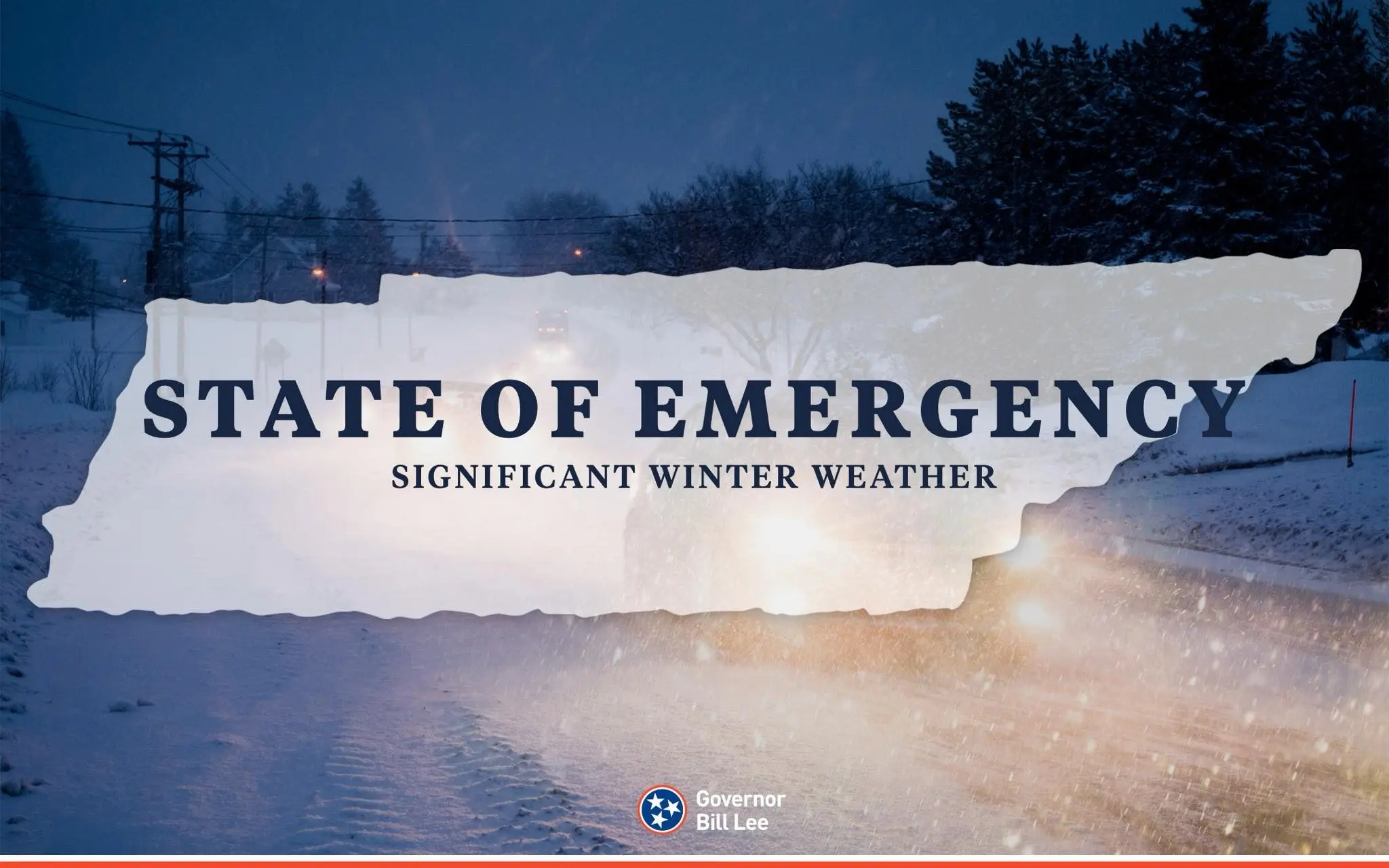
NASHVILLE, Tenn. – Today, Tennessee Governor Bill Lee issued a State of Emergency for all 95 counties and encouraged Tennesseans to prepare for the possibility of a major winter storm this weekend that could bring snow, ice, freezing rain, and prolonged freezing temperatures across the state.
National Weather Service forecasts show a significant winter storm moving through the state as early as Friday evening, with increased confidence for accumulating snow and freezing rain causing moderate to major impacts. As of this release, a Winter Storm Watch has been issued for all Tennessee counties from Friday evening (January 23) through Sunday (January 25). Dangerously cold temperatures are expected to last until midweek.
Tennessee Emergency Management Agency (TEMA) continues to work with local, regional, and state partners to support readiness actions and any requests for resources. For more information on this weather system, Tennesseans are encouraged to visit TEMA’s January 2026 Winter Weather webpage, which will be updated regularly with the latest forecasts, anticipated impacts, and safety guidance.
Tennessee Department of Transportation (TDOT) teams are currently pretreating roadways and have replenished salt supplies in all 95 counties. When winter weather hits Tennessee, TDOT ice and snow removal teams focus first on clearing interstates and heavily traveled state routes, specifically targeting areas vulnerable to freezing, such as hills, curves, ramps, bridges, and interchanges. During prolonged weather events, crews may have to clear roadways repeatedly. Tennesseans should use caution and stay off the road unless travel is essential, and give TDOT crews and first responders room to work safely.
Tennessee Highway Patrol (THP) troopers and dispatchers will be working around the clock during the winter storm, answering calls from stranded motorists and local partners, and clearing abandoned vehicles from interstates.
Tennessee National Guard (TNNG) is preparing vehicles and resources to support emergency response, transport patients to hospitals, and assist stranded motorists. Guardsmen and women are also readying emergency shelters and debris clearing equipment, staging resources strategically across the state.
SAFETY INFORMATION
Warming Centers
We encourage Tennesseans who need a warm place to stay to locate warming centers or other local resources that may be available. These warming centers are operated by local officials and community organizations. TEMA maintains a map of these locally managed shelters. For more information on resources available, local assistance or questions about shelters in your area, please contact your local emergency management agency.
Generator Safety
Generators can be helpful during a power outage, but they present serious health and safety concerns if operated incorrectly. Be sure to read the manufacturer’s instructions on how to use the generator prior to use. Some simple guidelines to follow include:
- Never use a generator indoors.
- Place them at least 20 feet from your home and away from windows.
- Do not hook them up directly to your home’s power supply.
On The Road
If you must drive in snow or freezing temperatures, reduce your speed and use extra caution. Black ice can be nearly impossible to spot, so when temperatures hover around freezing, drive as though ice is present on the roadway.
- Keep your gas tank as full as you can. A full tank will also keep the fuel line from freezing.
- When driving, increase your following distance from 3-4 seconds to 5-6 seconds. It takes longer to slow down and stop on icy roads.
- Every vehicle should have an emergency supply kit in the trunk. Kits should be checked every six months. Expired items should be replaced regularly.
- Keep family and emergency phone numbers, including your auto insurance provider and a towing company in your phone.
- Visit TDOT’s SmartWay Map for updated road conditions year-round.
PREPAREDNESS INFORMATION
Stay Informed
- Monitor Official Sources: Stay up to date with current weather information through your local National Weather Service Office and through your local news. Follow TEMA on social media for important guidance and updates and the TDOT for road conditions and updates.
- Sign Up For Alerts: Make sure your mobile device has weather notifications turned on. Some counties may offer emergency alerts through the local emergency management agency.
- Have a Weather Radio: NOAA Weather Radios are another tool that can provide life-saving alerts, even during power outages.
Make a Plan
- Create a Family Communication Plan: Your family may not be together when a disaster happens. Make sure everyone knows how to get in touch with one another and where to meet if separated.
Check Supplies
During winter weather, the main concerns at home or in the workplace include the potential loss of heat, power, and communications, as well as limited access to essential supplies if hazardous conditions persist. Make sure you have adequate emergency supplies on hand that meet the needs of your family, coworkers, and others in your daily community.
- Essentials: Your emergency kit should include water, non-perishable food, medications, flashlights, batteries, first aid supplies, and important documents.
- For your Car: In case you are stranded, you should also have a kit for your car. You should include: kitty litter, ice scraper, cell phone charger, blanket, flares, or reflective triangles.
Consider Specific Needs: Your kit should also include supplies that are specific to your daily needs and responsibilities. Don’t forget to have supplies for pets, infants, or elderly family members.